In this section I review one AI-powered application and demonstrate how it can be used to create new value.
This time the application is Instinct, one of the new personal AI agents that act on behalf of their owners, and I also cover two others that arrived at about the same time: Muse from Meta and dots from OpenAI.
What happens when your customers send an agent
For my own trip to Amsterdam for World Summit AI (7-8 October 2026), I of course used Claude to research good hotels, and then made the choice and the booking myself. I didn't use a proactive agent like Instinct to call hotels and negotiate prices on my behalf, but I might very much do so next time.
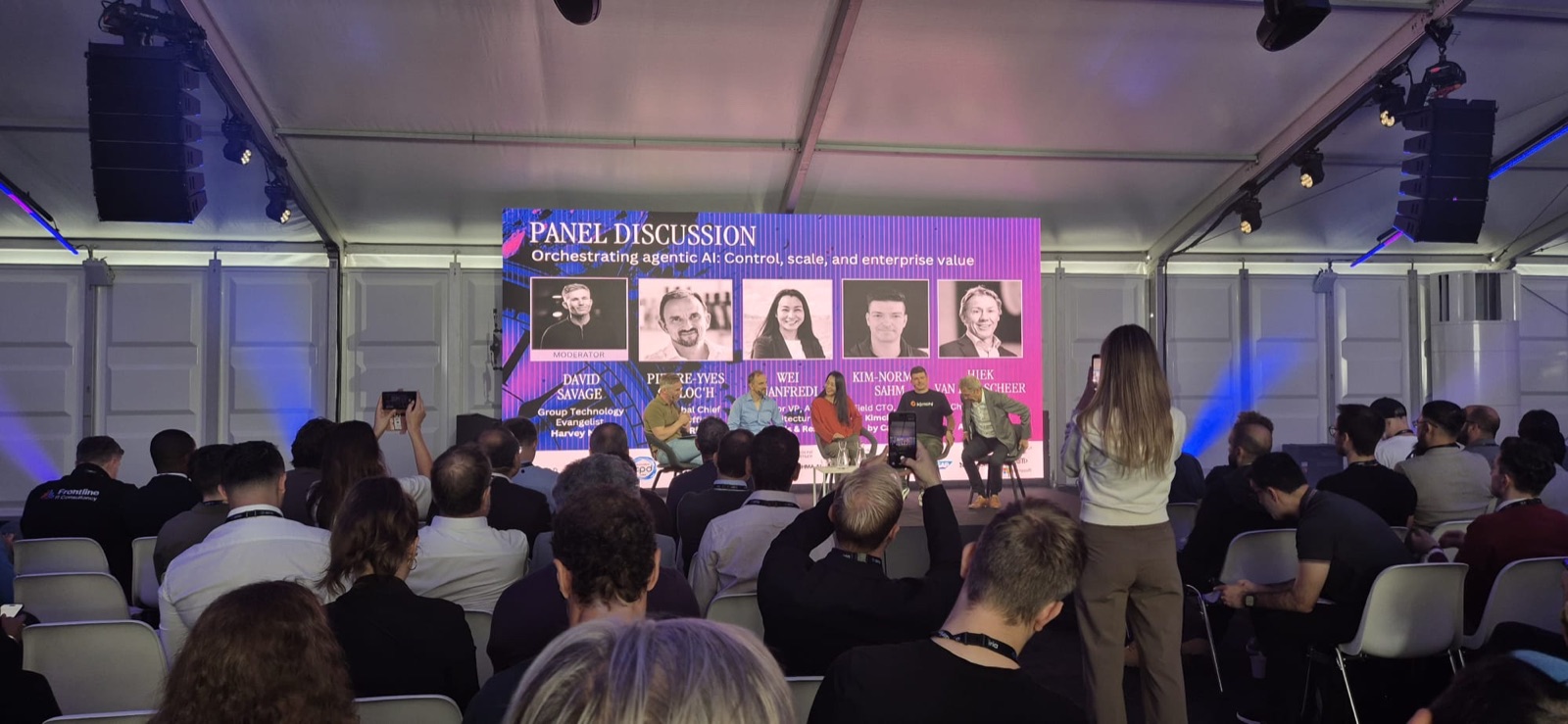
On the first day of the summit, I attended a panel on orchestrating agentic AI, with leaders from Pernod Ricard, IHG Hotels & Resorts and ABN AMRO. Wei Manfredi (SVP AI & Architecture at IHG) described what happened when the new personal agents arrived just a few weeks earlier. IHG was swarmed by AI agents negotiating on their owners' behalf. Within days, multiple internal teams had to work out what the agents should be allowed to do, and agree on it with Meta and OpenAI, the companies behind two of the agents. Blocking the agents didn't make business sense, and it wasn't customer centric.
The new personal agents
So what are these personal agents IHG was dealing with:
- Muse, from Meta, launched on 8 September. It can book travel, fill in forms, negotiate on your behalf and complete a checkout, and it works from its own virtual machine. You message it in its own app or in WhatsApp, and for now it is only available in the US.
- Dots, from OpenAI, launched on 29 September. OpenAI calls them "always-on agents": each dot has its own cloud computer, and keeps working toward the goals you give it while you are not in the chat. The first dot is included in the ChatGPT Pro and Business Premium plans, though the Pro plan doesn't offer it in the EEA, Switzerland or the UK.
- Instinct, from Spear Street Technology, a San Francisco startup founded by Noah Shinn, is still an invite-only beta. You text it on iMessage or WhatsApp, or call it, and it works from a cloud computer with browser access. According to Shinn, about half of its transaction volume is travel.
What sets Instinct apart from a chatbot is that it reaches out first - it is proactive by design. It texts or calls you when something needs doing, and it keeps working between your messages, whether that means booking appointments, checking into flights, arranging rides or cancelling subscriptions. I explain the term in this issue's terminology post, What are proactive AI agents?
My experience with Instinct so far
Since the summit I have started using Instinct myself. It's nice, and a bit more proactive, but for now I don't feel a big difference. The caveat is that I haven't really sent it to do big things on my behalf, like ordering or calling. I have mostly used it for research, and for research Claude is still better informed, and it is where I already am.
What this means for your business
Your customers may soon send an agent instead of visiting your website, and that agent will expect to find what it needs, take action and pay. IHG had to work this out within days. If you want more time than that, I suggest you start deciding now what these agents may see and do in your systems, and when a person on your side needs to step in.
Go deeper
If you want to dive deeper, watch Greg Isenberg with his guest Remy, who walks through how he uses Instinct day to day. You will see the agent get stuck booking a restaurant in Copenhagen, email the restaurant instead, and come back a few hours later to confirm the booking. Remy also shows how he limited the risk by giving the agent a separate payment card with a daily spending limit, and how it filled in a visa form by finding where he had traveled from his emails and receipts.
Your action step
Have agents already started showing up on behalf of your customers? It's time to get ready. Pick one customer journey, for example a booking, and write down what an agent acting for a customer may see and do in it, and at which step a person on your side needs to step in. If you have access to Instinct or one of the other agents, try a small task on it yourself, to see what it expects to find on the other side.
If you want to work out how your business should respond when customers start sending agents, that is the kind of question I take on in AI strategy advisory engagements and in sessions as an AI keynote speaker and workshop facilitator.