There is a big opportunity now in letting subject matter experts become solution builders. They are the people closest to the problems. I wrote about it in Executives are vibe coding, in the context of vibe coding for executives. But this calls for a mindset change in IT, from deciding who may build to making it safe for more people to build.
One of the talks I attended at World Summit AI in Amsterdam (7-8 October 2026) showed what this can look like in a large company. Matt Bauman - SVP Sales at Base44, the AI app-building platform - suggested a new way to build business applications, one that AI-powered tools now make possible.
Build, ask, then finish
In the classic software development lifecycle, a business need becomes a request in IT's backlog, and requirements are written and approved before anything is built. The asking comes first.
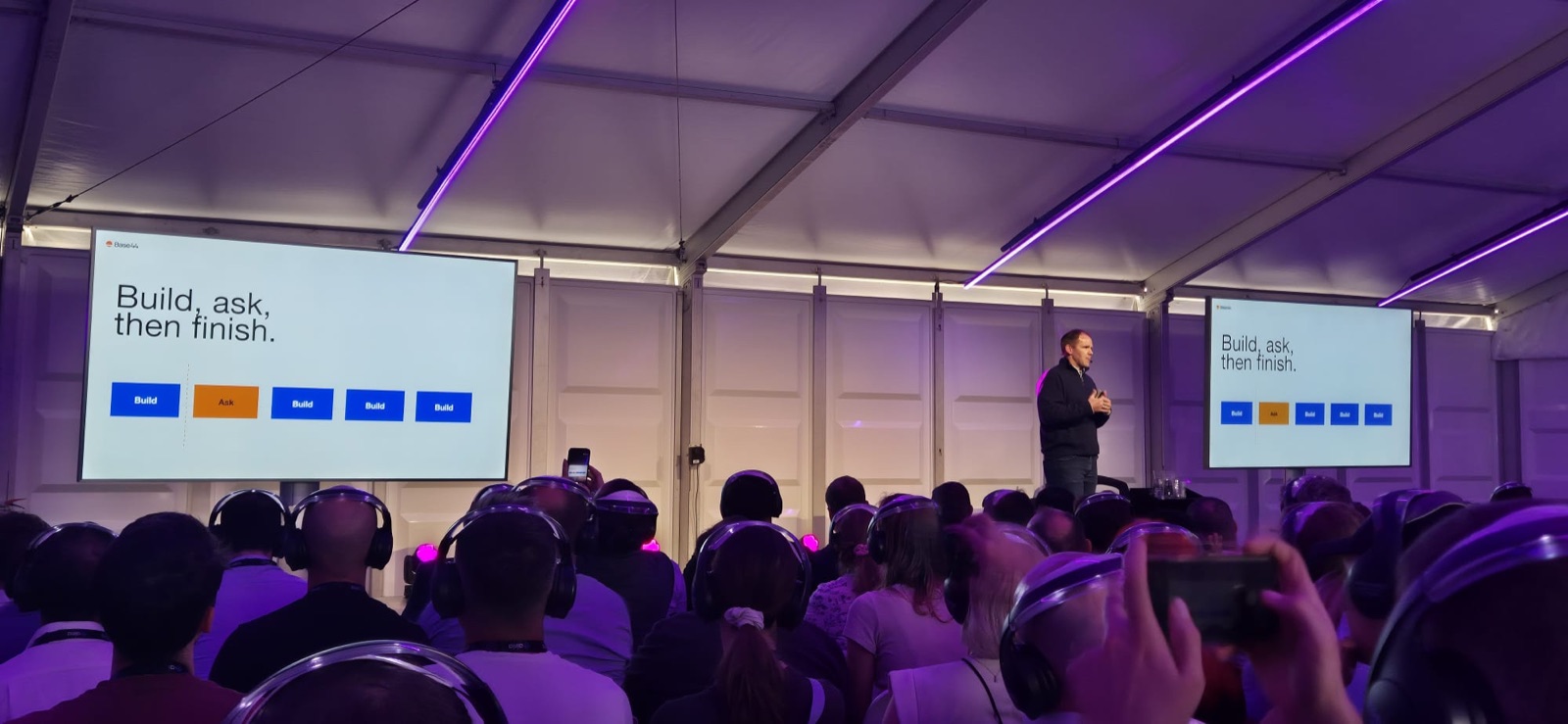
Matt's flow is "Build, ask, then finish": the expert builder starts with a first working version, before asking anyone. They go to IT only once there is something real to show, and the app needs a connection to a business system or should reach people beyond their team.
What makes it safe to build first?
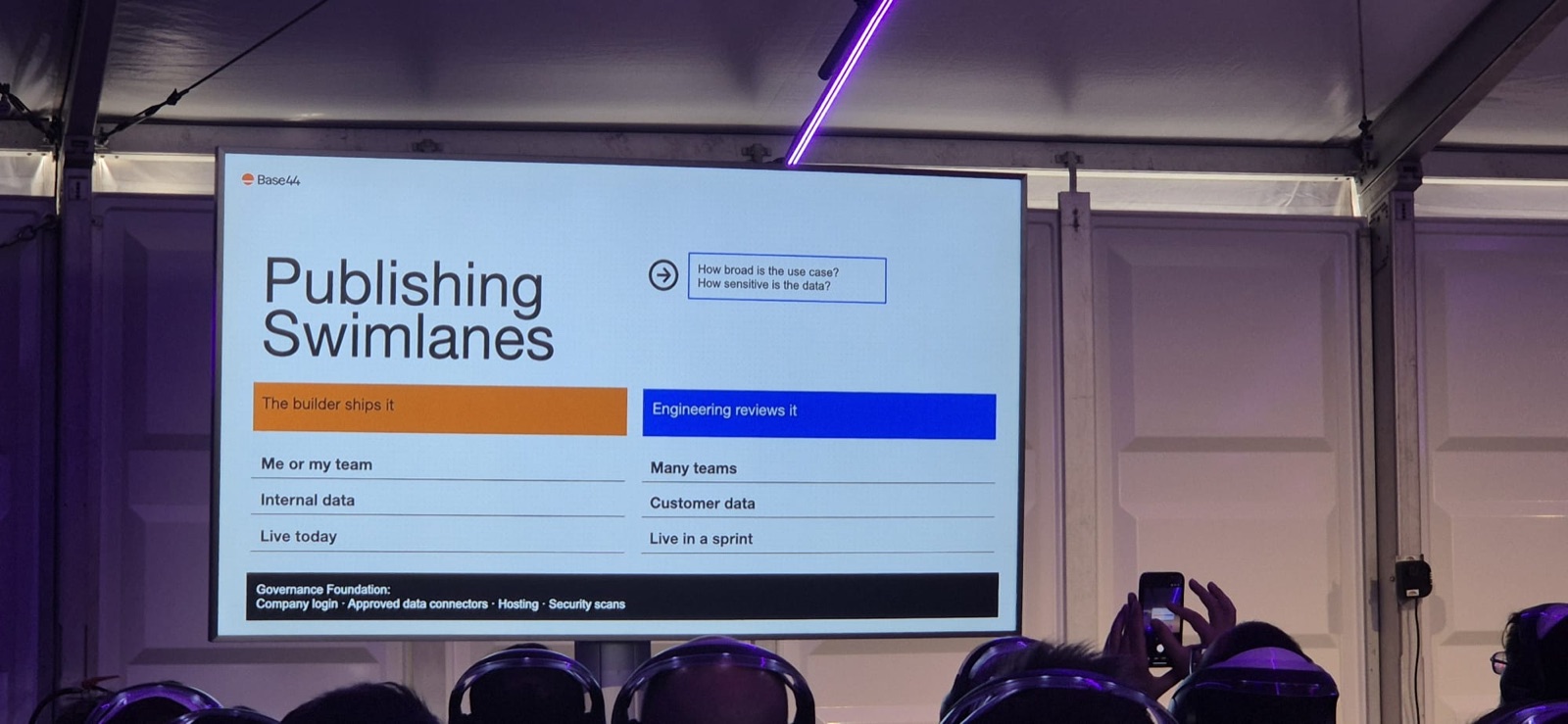
For this order to work in a company, IT has to set it up: it owns the platform and makes it safe for others to build on. How an app gets published depends on two questions: how broad is the use case, and how sensitive is the data? Base44's slide called the two answers publishing swimlanes:
- The builder ships it. An app for the builder's own team, working on internal data, can go live the same day. IT can still see that it went live, and review it if needed.
- Engineering reviews it. An app for many teams, or one that touches customer data, goes through an engineering review before it goes live within a sprint.
Both paths sit on the same foundation of company login, approved data connectors, hosting and security scans.
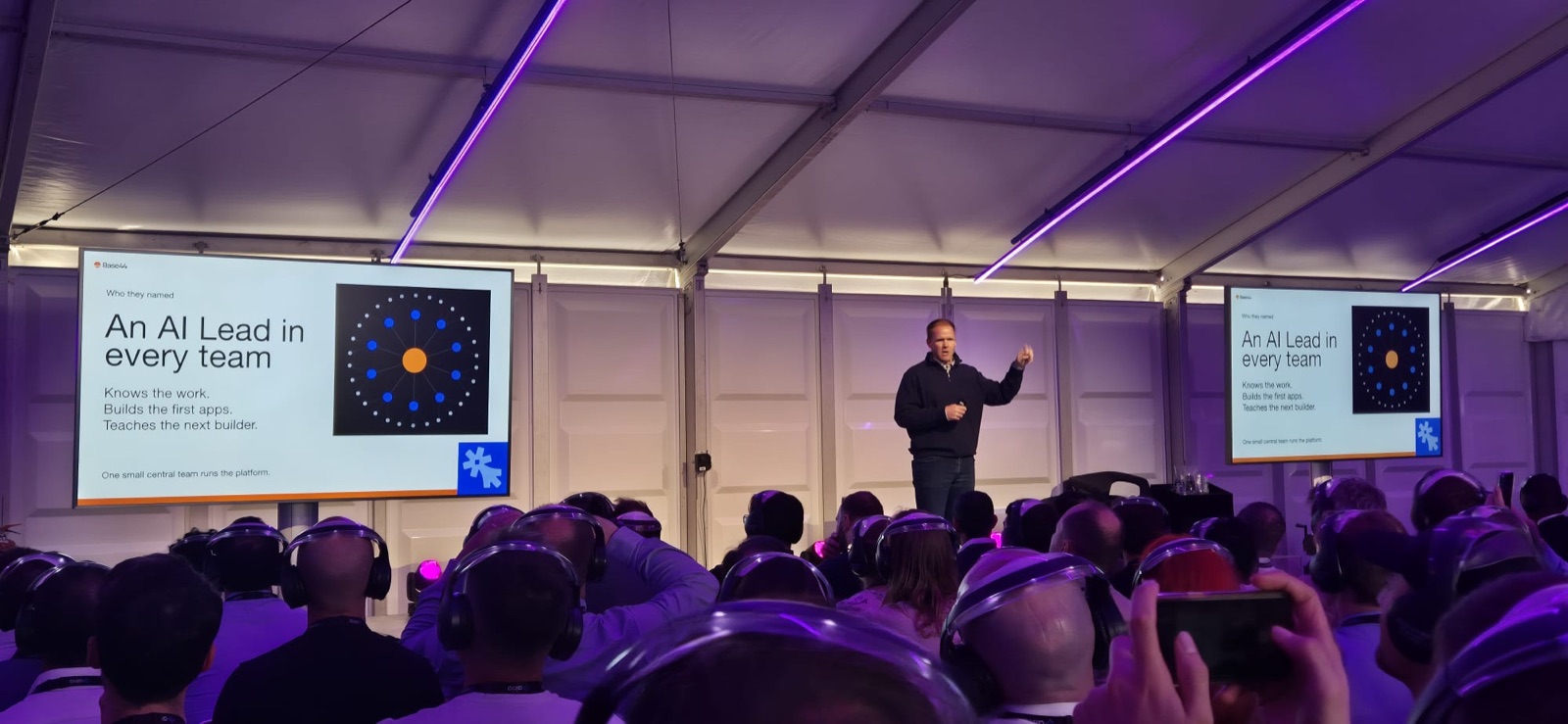
This operating model also puts an AI Lead in every team: someone who knows the work, builds the first apps and teaches the next builder, with one small central team running the platform.
The same pattern in other sessions
Other sessions at the summit showed the same thing happening. Diana Hoskins Schildhouse, Chief Data & Analytics Officer at Colgate-Palmolive, showed how an idea from one site can become a company-wide app. Their Safeguard AI started at an AI hackathon at one of their facilities in Argentina. It checks equipment for safety risks, and is now scaling to 52 plants worldwide. One of the five lessons she shared on moving from pilot to scale was to "build with users from the beginning". Involving the people affected early is also the first practice in this issue's leadership post, Ownership beyond your own team.
I see this happening with customers I work with too. In one case, an HR manager built an onboarding app for new employees. In another, a legal subject matter expert built an app for intaking legal support requests. Before that, they had a solution built on SharePoint that was last updated six (!!!) years ago, because there were no IT resources to fix it.
Your action step
If you lead IT or an AI program and want to try the "build, ask, then finish" order, I suggest you start with one real need. Pick a team with a problem, and let a subject matter expert from that team build a first version on an approved and simple to use platform. Then have the users and IT look at it together. You will be surprised what passionate experts can build, and how it resonates with users. You will also learn what kind of guidance is needed to let the experts build safe and effective solutions.
If you want to set up a safe way for business experts in your organization to build their own apps, that is the kind of work I take on in AI strategy advisory engagements and in hands-on sessions as an AI keynote speaker and workshop facilitator.