At the Industrial Future Summit by Combient Foundry, which I attended at the beautiful Artipelag location on 9 November 2026, one session was close to my heart. In "How KONE and AWS turn experiments into scale", Amy Chen, Chief Innovation Officer at KONE, talked about how KONE turns experiments into scale, and the AWS team shared the Amazon innovation methodology behind it. This co-innovation partnership started when I was leading the AWS Innovation program in the Nordics, and I had the opportunity to run seven Working Backwards engagements with them, so naturally I was excited to see how deeply it was woven into their innovation mechanisms, and the results of some of the projects I worked on early on.
Where VAELLA started
KONE shared how they spun out VAELLA, an AI operator for crowded spaces such as metro stations. It was built in 3 months with a small team, and it already has paying customers. VAELLA is KONE's first spin-out, launched in June 2026.
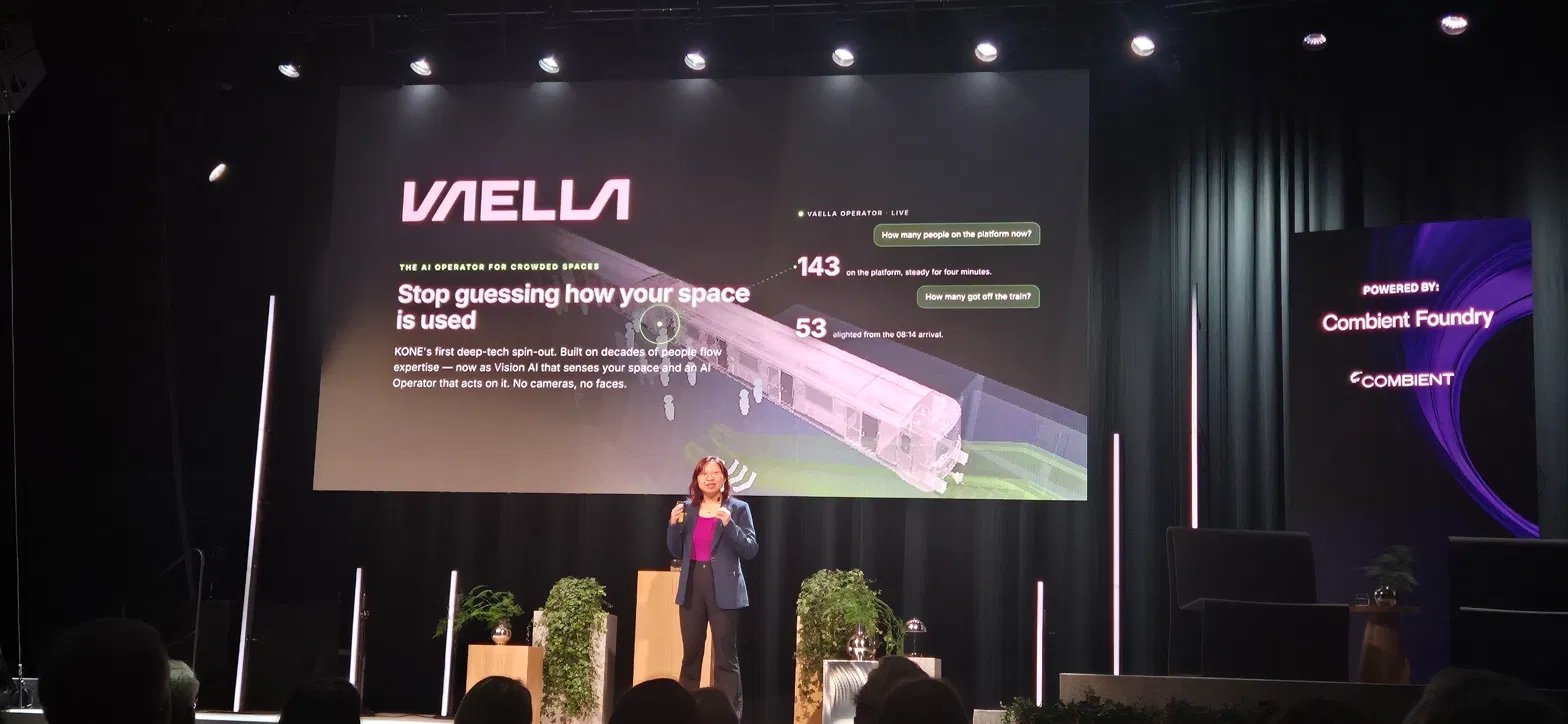
I had the pleasure to be involved in the original innovation for this product. I ran the Working Backwards engagement with KONE, wrote the PRFAQ with them, and built the first prototype of StationTwin.
Speed is the story
The conversation between KONE and AWS revolved around the speed of innovation. Amazon's team has shared how internally they have gone from 6-7 months to some launches in 2 weeks, and KONE from 18 months to 6-8 months.
Yixin Fang, Head of Manufacturing Sweden at AWS, closed the session with this line: "Speed is a construct and a management decision."
The mechanisms behind the speed
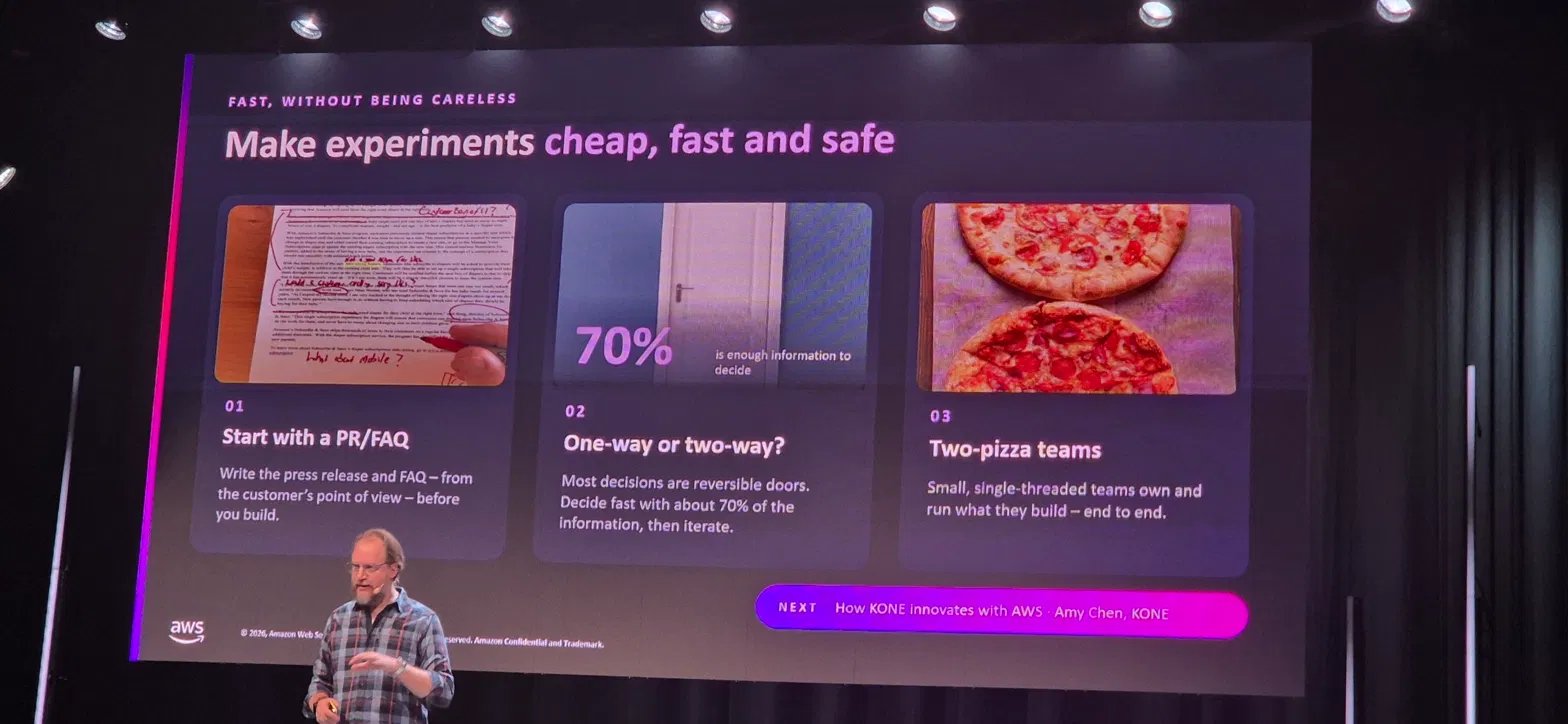
The AWS team showed how Amazon's innovation mechanisms speed things up. Three of them are worth noting:
- Two-way door decisions. A two-way door is a decision you can reverse if it turns out to be wrong, so it can be made quickly. The AWS team talked about designing decisions so that more of them are two-way doors.
- Two-pizza teams. Small teams that own what they build end to end, so they do not wait on hand-offs to other teams.
- The PR/FAQ. Working Backwards starts from a press release and FAQ written from the customer's point of view, before anything is built. Later that evening, in a conversation with people from startups, NVIDIA, AWS and others, that process and document raised a lot of interest and people wanted me to tell them more about it.
What AI changes in Working Backwards
It was interesting to hear how AI is inviting us to revisit even well-established innovation processes such as Working Backwards. Teams can now quickly build several versions of a prototype or product and have users interact with them, to learn what works early on. I wrote about this in Working Backwards: how AI transforms Amazon's innovation engine and in From Working Backwards to working prototype in a week.
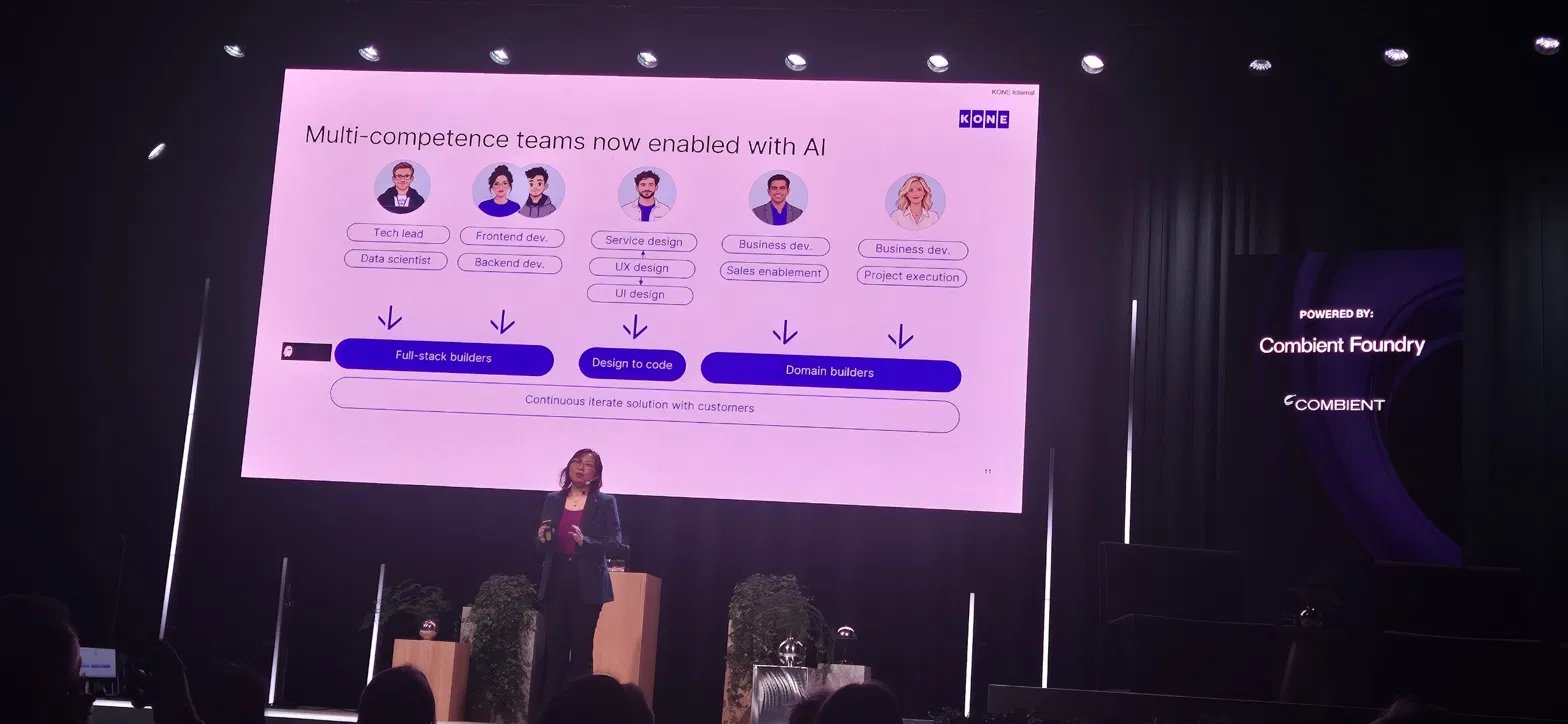
Amy Chen also described how the lines between roles are blurring, with leaner teams, and customer-facing people building as domain experts.
On safety, the KONE and AWS panel talked about separating what is safety-critical from what can be tested in digital twins and world models, with formal validation for safeguards.
Speed as a task for leadership
On the opening panel of the summit, Ola Källenius, CEO of Mercedes-Benz Group, said this is a time to try and reinvent the company, learning from startups and scale-ups that are good at adapting and reorganizing the way we work, and that this is a task for leadership. Hannele Palje-Rossi, CIO of Stora Enso, put it this way: "There is no pause button. We need to perform while we transform."
This was one of five themes I saw at both summits I attended this autumn. The others are in There is no AI playbook yet.
Your action step
If your cycle from signal and idea to customer test is measured in quarters, these mechanisms are a practical place to start shortening it. Pick one idea, and give it to a small team that owns it end to end. Ask which of the decisions ahead are two-way doors, and let the team make those itself. Then have users interact with a first prototype as early as you can.
If you want to bring Working Backwards and these mechanisms into your organization, that is the work I do in Working Backwards innovation engagements, and in sessions as an AI keynote speaker and workshop facilitator.