This autumn I attended two summits: World Summit AI in Amsterdam on 7-8 October, and the Industrial Future Summit by Combient Foundry at Artipelag, outside Stockholm, on 9 November. At both, the conversation had moved from what AI can do to what it takes to run it every day. Several companies showed how they went from AI pilots to scale, with numbers and business results.
Colgate-Palmolive: broad enablement and building with users
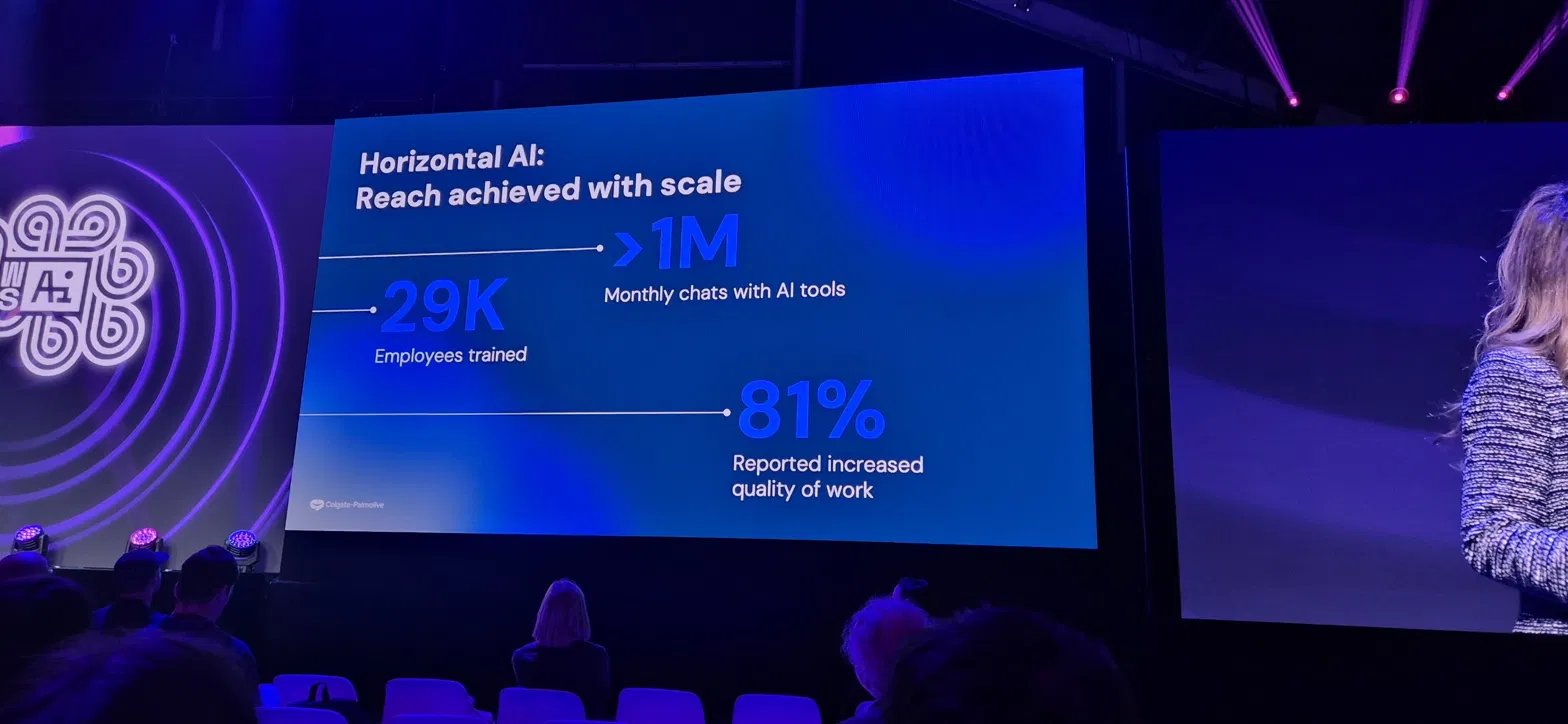
Diana Hoskins Schildhouse, Chief Data & Analytics Officer at Colgate-Palmolive, showed their "horizontal AI": safe tools with governance and guardrails, plus a custom upskilling program. She shared these results:
- 29K employees trained
- More than 1 million monthly chats with AI tools
- 81% of people reporting better quality of work (self-reported)
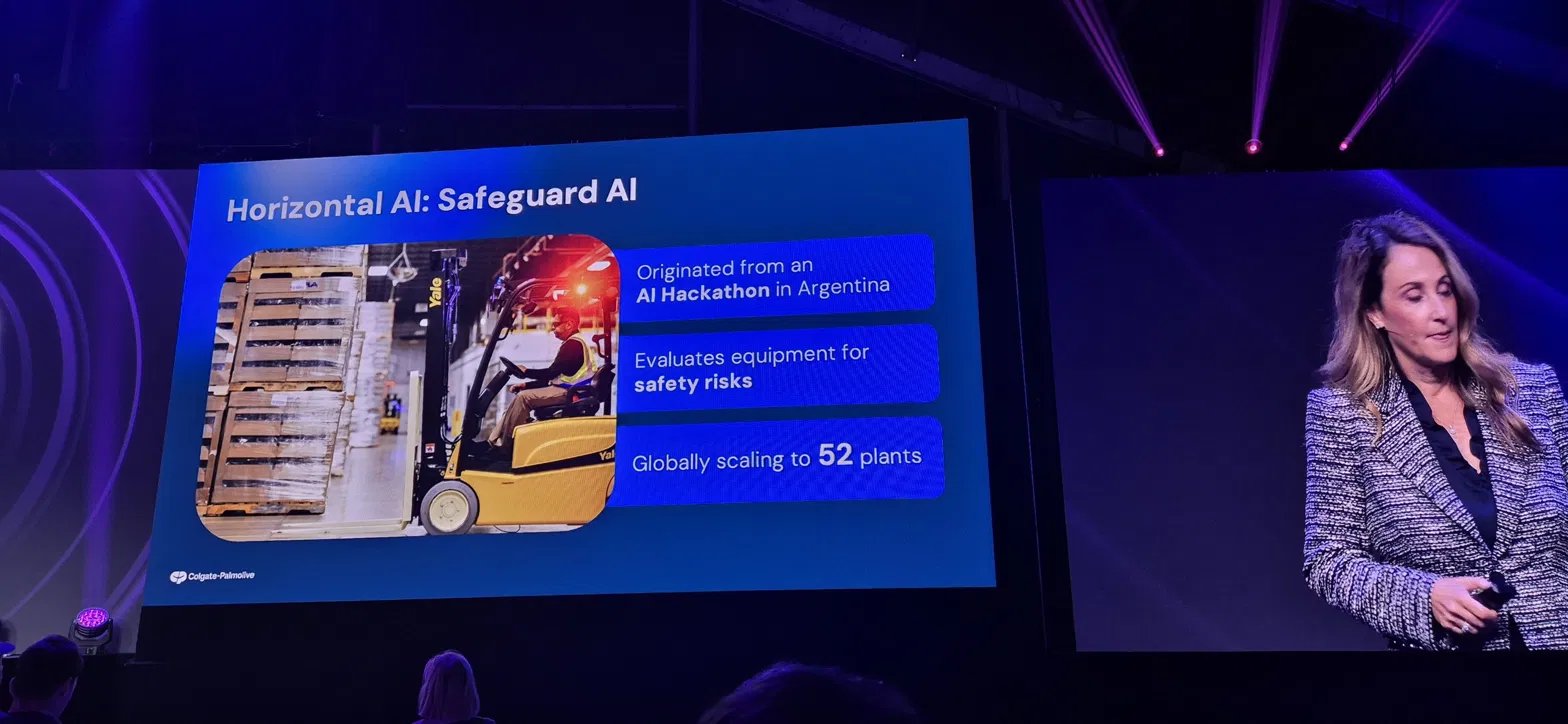
Their Safeguard AI, which checks equipment for safety risks, started at a hackathon at one plant in Argentina and is now scaling to 52 plants. I wrote more about it in Build, ask, then finish.
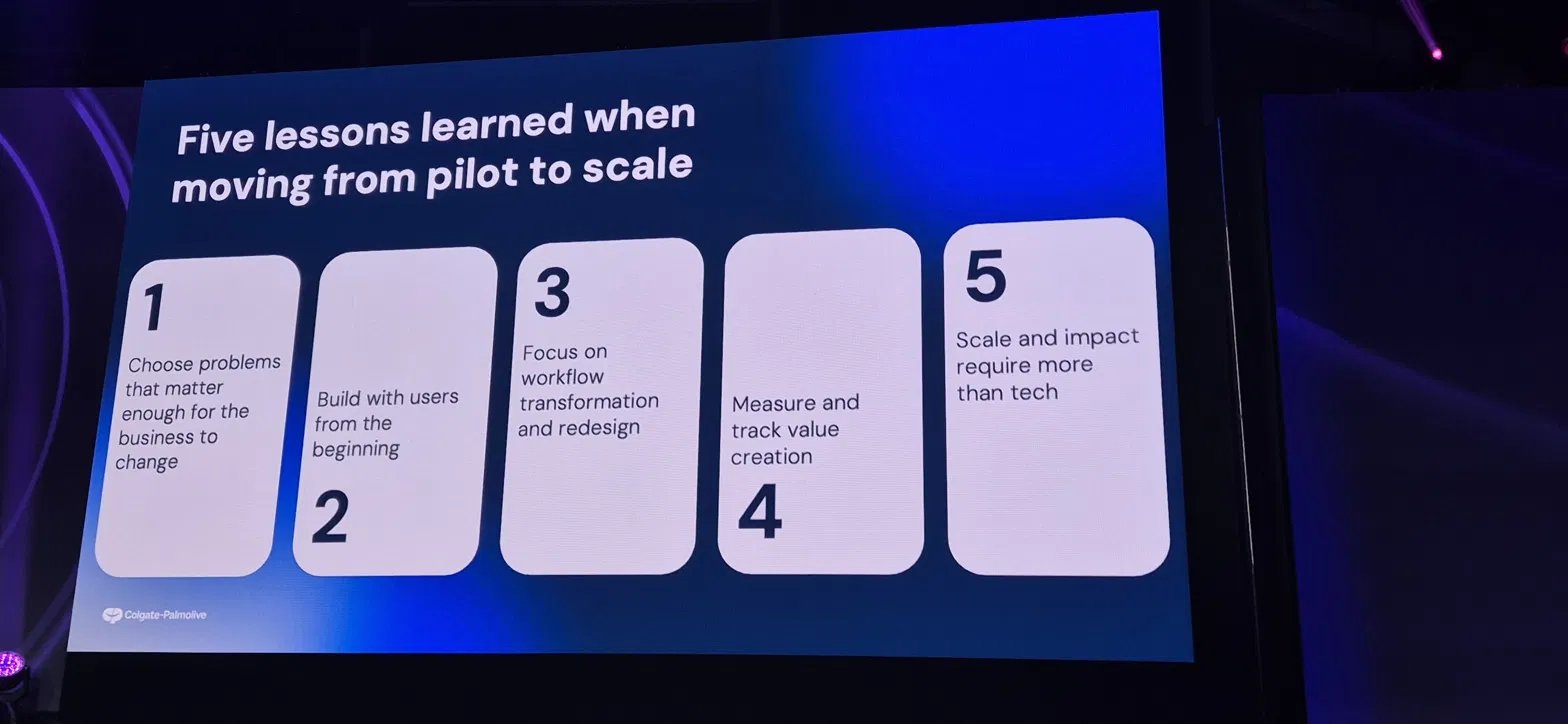
Diana shared five lessons from moving from pilot to scale in AI strategy and initiatives:
- Choose problems that matter enough for the business to change
- Build with users from the beginning
- Focus on workflow transformation and redesign
- Measure and track value creation
- Scale and impact require more than tech
Autoliv: AI as the way the strategy gets executed
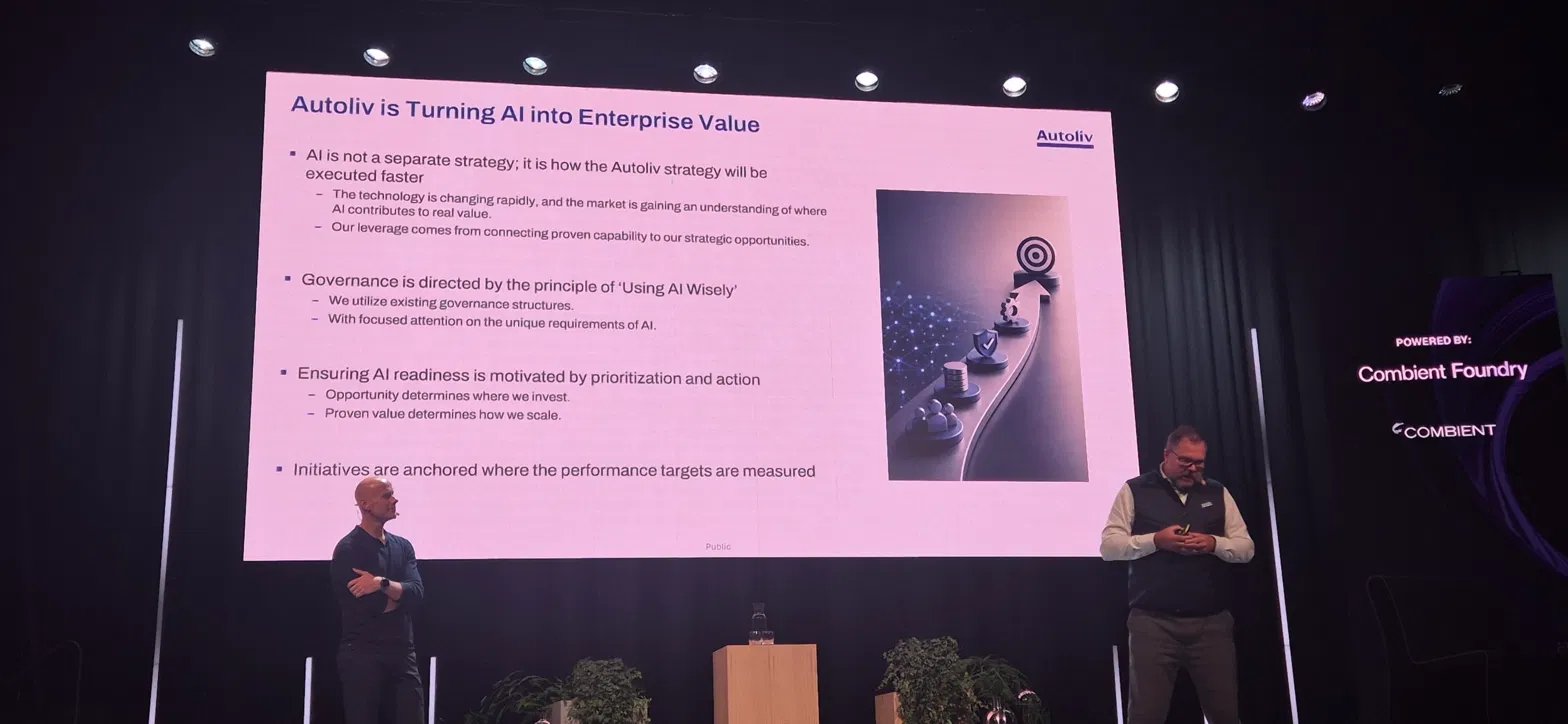
Magnus Jarlegren, President Autoliv EMEA, showed how Autoliv goes from AI pilots to rollout across 60+ plants, scaling when the value is proven. In his words: "AI is not a separate strategy; it is how the Autoliv strategy will be executed faster." Autoliv also runs AI through its existing governance, under "Using AI Wisely".
KION Group: from proof of concept to operations
Robert F. Smith, CEO of KION Group, said 2024 and 2025 were proof of concept, and 2026 is operations, with fleets of autonomous vehicles deployed at GXO warehouses in France.
Stora Enso: value from the mills
Hannele Palje-Rossi, CIO of Stora Enso, shared results from AI in their mills:
- 1% wood savings a year, on the 30 million cubic meters of wood used last year
- Predictive maintenance signals a day ahead, which avoided a day of production downtime, from a single startup engagement
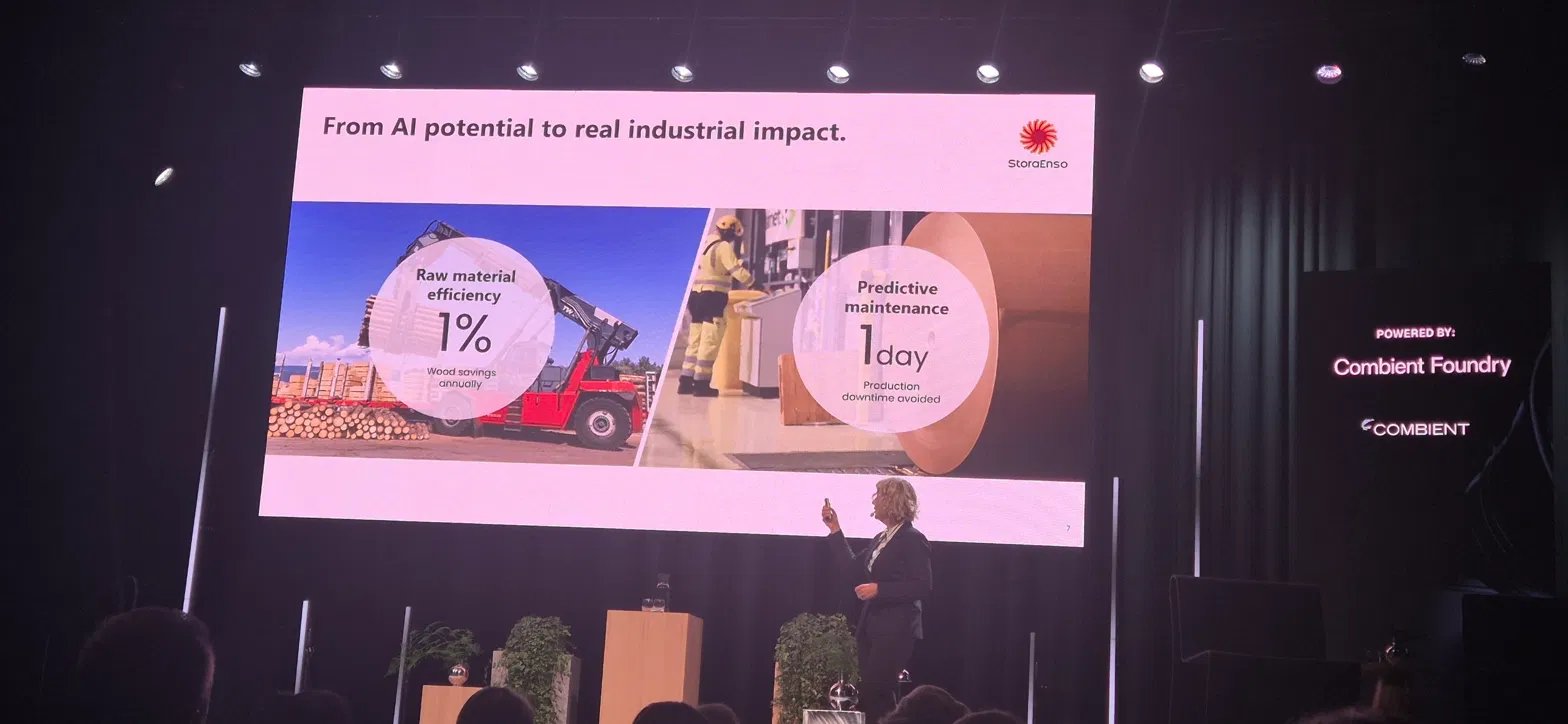
Stora Enso works with startups to drive innovation in the context of its 700-year legacy, with infrastructure built over time, and has deployed 34 industrial AI solutions with partners: 16 in safety and workflows, 12 in decision intelligence and reliability, and 6 in energy and resource efficiency.
The five lessons as a checklist
I think Colgate-Palmolive's five lessons work as a checklist for any AI pilot heading toward scale. Here they are as questions to ask about your own pilot:
- Does the problem matter enough for the business to change? If the answer is no, the pilot may succeed and still not be adopted.
- Were the users involved from the beginning? Safeguard AI started at a hackathon in a plant, with the people who would use it.
- Are we redesigning the workflow, or adding a tool to the old one?
- Are we measuring the value created? Stora Enso could trace it back to wood savings and the downtime it avoided. Autoliv scales only when the value is proven.
- What, beyond the technology, does scaling need? For physical AI in particular, the foundations that came up at the Industrial Future Summit were data, safety and people transformation.
The MIT maturity model looks at the same question from the research side, and From AI activity to AI value covers connecting AI work to business value.
This was one of five themes I saw at both summits. The others are in There is no AI playbook yet.
Your action step
Take one AI pilot you are running now and go through the five questions with the team. Then check who owns it and how it is measured: make sure your AI initiatives are directly connected to the business strategy, and not run as a side program.
If you want help taking your AI pilots to scale, that is the kind of work I take on in AI strategy advisory engagements, and in sessions as an AI keynote speaker and workshop facilitator.